Why Your Aircon Might Be Using More Power
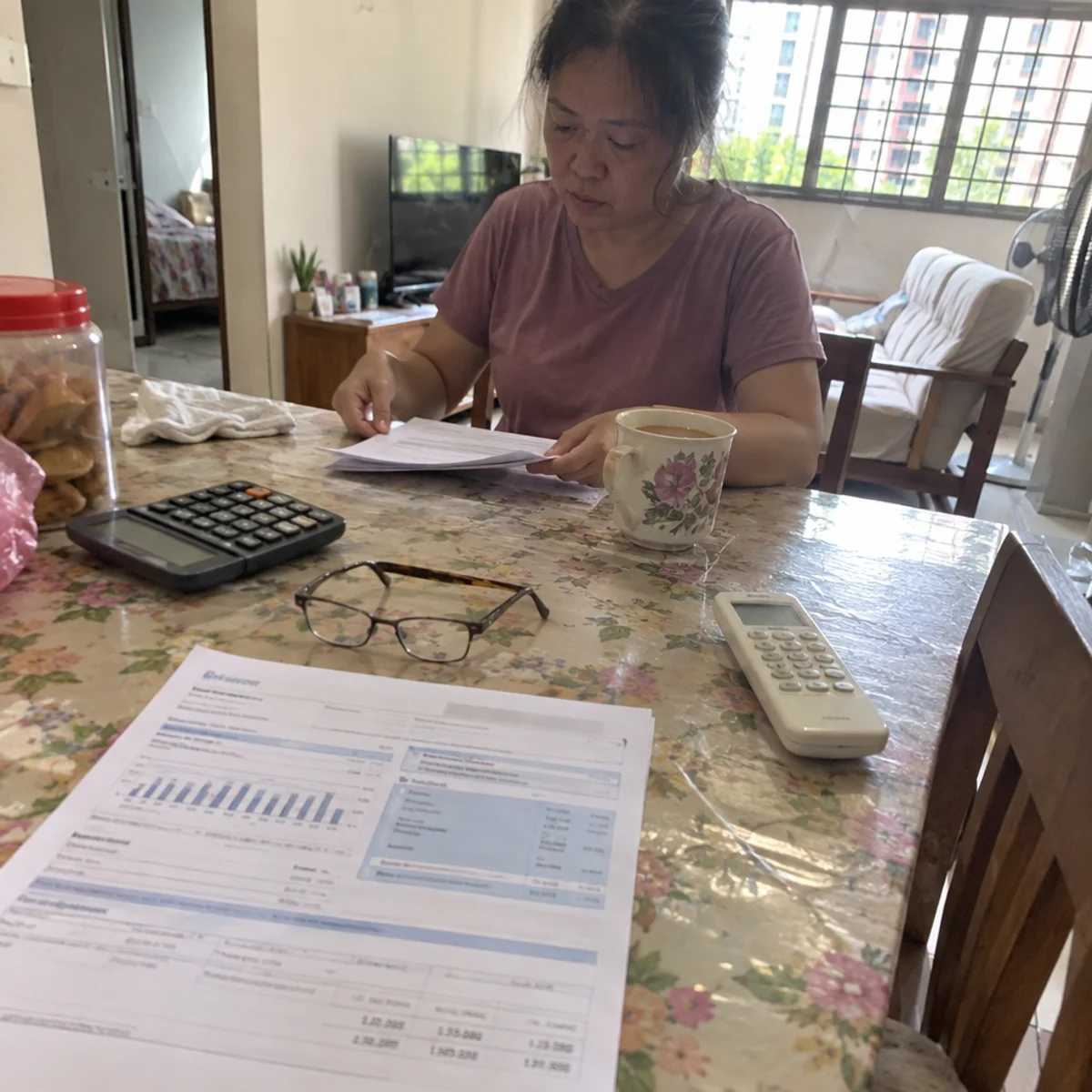
Did your bill jump this month, even though you’re using the aircon the same way? That’s what a high aircon electricity bill diagnosis is for.
In most Jurong homes, the aircon is the biggest single user of electricity. NEA’s 2017 household survey put air-conditioners at about 24% of a typical home’s power use, ahead of fridges at 17% and water heaters at 11%.
Check one thing first: your kWh figure. SP Group raised the household tariff by 17.0% (4.64 cents per kWh before GST) for July to September 2026, so a bill can climb without your aircon doing anything different. If your kWh went up too, one of the causes below is usually behind it.
Clogged filter and dirty coil
A clogged filter and a dirty coil block airflow. The unit takes much longer to cool the room, so the compressor runs for more hours. This is the most common cause, and the easiest to fix with servicing or a chemical wash.
The telltale sign is a slow climb. Bills from dirty coils tend to creep up over months, while low gas tends to cause a sudden spike, according to a Singapore guide from Snowflake Aircon.
Gree’s Singapore filter guide suggests checking filters every 2 to 4 weeks if you run the unit nightly. Cleaning helps a lot, but it can’t fix a gas leak.
Low refrigerant
With too little gas, the system cannot move heat efficiently. The compressor runs non-stop trying to reach the set temperature, and that shows up directly in kWh on your bill.
Gas doesn’t get “used up” like petrol. Billy Aircon’s repair guide points to a slow leak in the copper piping as the usual reason for low gas. That’s why a top-up on its own often doesn’t last.
You’ll usually notice weaker cooling at the same time as the bill spike. If both happen together, tell your technician.
Faulty thermistor
The thermistor tells the unit how warm the room is. If it misreads, the unit may never think the room is cool enough and keep running.
A failing sensor can also cause short-cycling, as Snowflake Aircon notes in its thermistor guide. Heat near the indoor unit can skew the reading too, so move any lamp or hot appliance away from it before you call us.
Short-cycling
Short-cycling is when the compressor starts and stops too often. Each start draws a surge of power, and the unit never settles into efficient running.
Billy Aircon describes the pattern clearly. The aircon starts, runs for a few minutes, stops, pauses, then repeats the loop. Watch your unit for ten minutes at night, and you’ll spot it quickly.
Old non-inverter unit
An older non-inverter system switches fully on and off. A modern inverter system slows down instead, which saves power in daily use. Older units also tend to have a lower rating on the NEA energy label.
The gap shows up in the numbers. These are typical figures for a 9,000 BTU unit, from the Singapore retailer Aircons.sg:
| Old non-inverter (1 to 2 ticks) | 5-tick inverter | |
|---|---|---|
| How it runs | Full on, then full off | Slows down as the room cools |
| Typical power draw | 900 to 1,000W | 550 to 650W |
| Savings in daily use | None | 30 to 50% lower bills |
Since 1 April 2025, NEA’s rules say new single-split aircons sold in Singapore must have at least 4 ticks. Multi-split systems must have 5. If your flat has older units, the tick count on the label tells you a lot.
What Our Diagnosis Checks
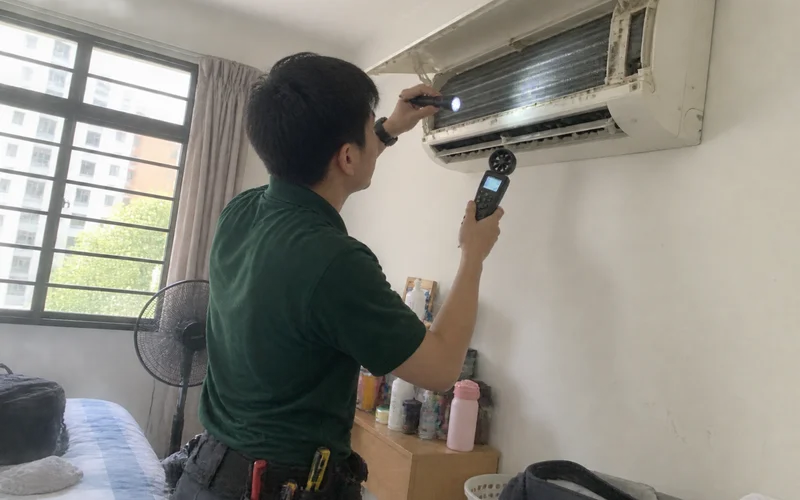
Our technicians go through six points on every high-bill visit. Each one rules a cause in or out, so you pay to fix the real problem.
| Check | What it tells us |
|---|---|
| Filter and coil condition | Whether dirt is forcing longer run times |
| Airflow at the vents | Whether the blower wheel is moving enough air |
| Refrigerant pressure | Whether a leak is making the compressor overwork |
| Thermistor reading | Whether the unit is reading the room correctly |
| Compressor cycling | Whether it is running non-stop or short-cycling |
| Unit size vs room | Whether the BTU rating suits the room |
The last row gets missed a lot. A unit that’s too small for the room struggles all day, and Snowflake Aircon lists undersized units among its seven common causes of bill spikes.
Common Fixes
Most high-bill cases end with one of these:
- General servicing if filters and coil are dusty
- A chemical wash for a coated coil and blower wheel
- A leak repair and gas top-up for low refrigerant
- A sensor replacement for a faulty thermistor
If the honest answer is that an old unit is simply inefficient, we tell you. Replacement is handled by Cool Earth Aircon.
Regular aircon servicing in Jurong prevents most of these in the first place. Cool Channels’ 2026 maintenance guide suggests every 3 to 4 months for Singapore homes that use the aircon daily. With 2 to 4 units in your flat, staggering them can keep it manageable.
Small Habits That Help
Washing filters every few weeks makes a real difference, and our guide on cleaning aircon filters yourself shows how. Setting the temperature at a comfortable 24 to 25°C instead of the lowest setting also cuts running time.
NEA says each degree you raise the setting saves about 3% of utility costs. Its tips page also suggests two more habits:
- Run the aircon for about an hour, then switch to a fan. NEA estimates this saves about 23%.
- Set the timer to switch off half an hour early. The room stays cool for a while, and NEA puts the saving at about 2%.
Habits only go so far if the unit itself is struggling. If your bill is still high after trying these, book a diagnosis with us. We’ll check the six points above and tell you plainly what’s behind your high aircon electricity bill.