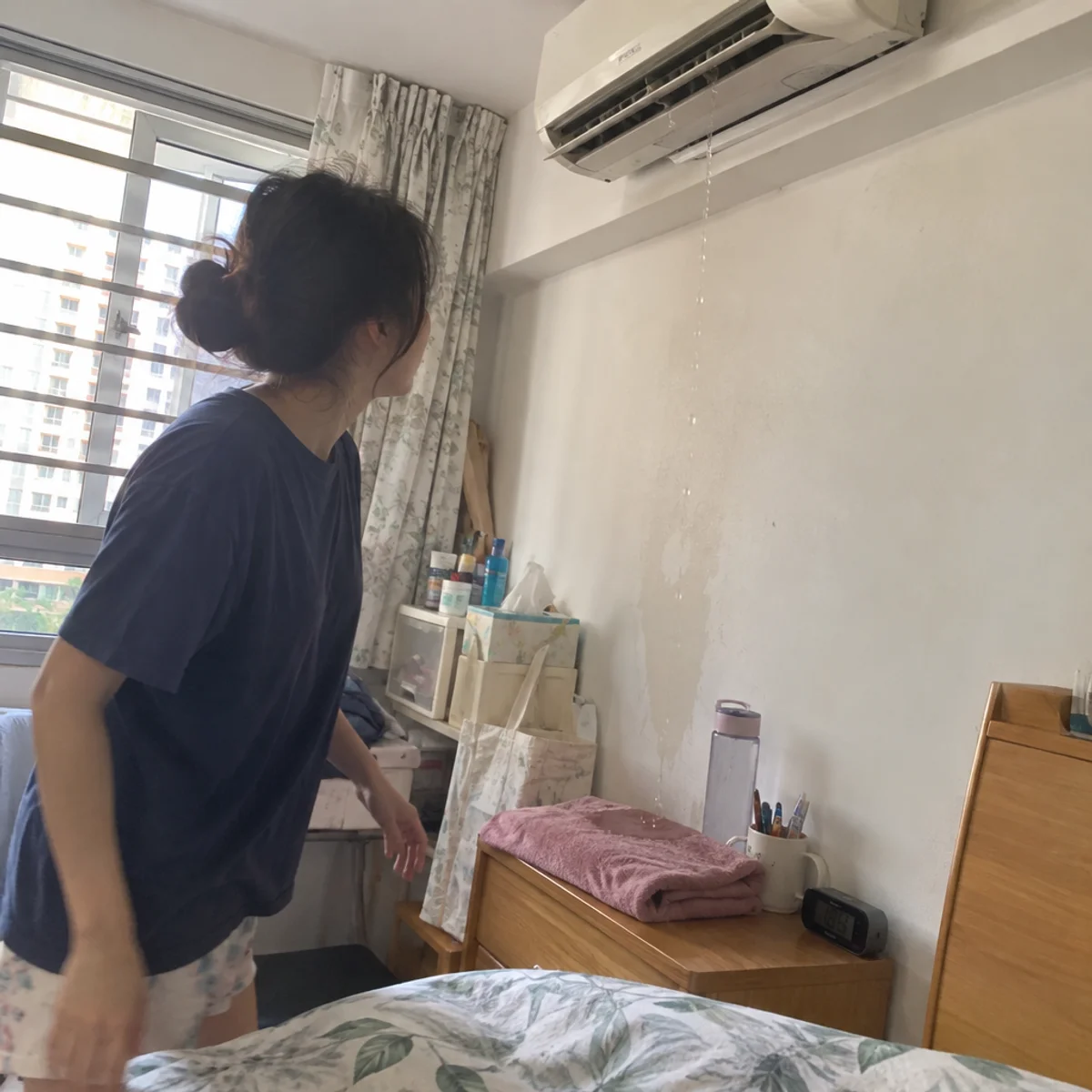
Is water dripping from your aircon onto the wall, the bed or the floor? It never happens at a convenient time.
Most aircon water leak repair jobs we see in Jurong West and Jurong East come down to a blocked drain line, not a broken aircon. Aircon Servicing Jurong is the Jurong service of Cool Earth Aircon, which Brian started in 2007. A 2026 HomeJourney guide on Singapore leaks puts clogged drain lines at around 60% of cases, and that matches our own jobs.
Here’s where the water comes from, how we fix it, and how to stop it coming back.
Where Does the Water Come From?
Every aircon pulls moisture out of the air. That water collects on the cold coil, drips into the drain pan and runs out through the condensate drain line to the outside. When any part of that path fails, the water has nowhere to go but your wall, bed or floor.
Singapore’s humidity makes this a daily job for your unit. Check the four usual suspects below.
Choked drain line
This is the most common cause by far. Dust and mould mix with water and form jelly sludge that slowly blocks the line. Water backs up into the pan and spills over.
Here’s a quick clue. A steady drip from the front of the indoor unit usually points to a choked drain, according to Fixmove’s Singapore troubleshooting guide. If you see that, switch the unit off and call us before the water spreads.
Cracked or tilted drain pan
Older pans crack with age, and a pan that sits slightly off-level lets water pool at one end and overflow.
Fixmove notes that a cracked, corroded or displaced tray can leak even when the drain line is completely clear. So if you’ve had a flush and the drip carries on, the pan is the next place to look.
Poor pipe slope
Drain pipes need a steady downward slope. If the pipe sags or rises along the trunking, water sits in the low point and backs up.
Did the leak start after a renovation or new ceiling work? Tell us. Fixmove lists that as a classic sign of a pipe with a poor fall, and it saves us time tracing the problem.
Worn pipe insulation
Old or torn pipe insulation lets the cold copper pipes sweat, and that condensation drips along the wall.
Water running down the wall behind the unit often means a loose joint or worn insulation, according to Helpling’s Singapore leak guide. It looks like a drain problem, but it isn’t.
How We Fix a Leaking Aircon
- Trace the leak. We check where the water appears, look inside the unit and follow the drain path.
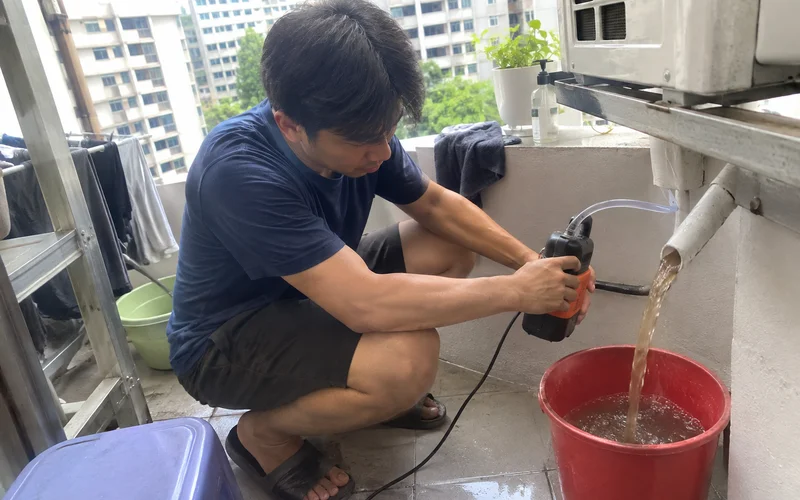
- Pump flush. A drain pump pushes water through the line to clear sludge from end to end.
- Fix the pan. The drain pan is cleaned and re-seated, or repaired if cracked.
- Correct the piping. We check slope and insulation along the trunking and out to the aircon ledge.
- Flow test. Water is poured into the pan to confirm it drains fully before we leave.
That last step matters to us. A leak that “looks fixed” can still fail the first time you run the unit for a few hours, so we don’t leave until the water runs out properly.
HDB’s aircon installation guidelines, as Helpling summarises them, say condensation water should discharge into a floor trap inside your flat. It shouldn’t drip onto the ledge or onto a neighbour. That’s why we follow the drain path all the way to the end.
If the unit is coated in sludge and mould, flushing alone will not last. In that case we explain why a chemical overhaul is the lasting fix, and quote it before any work.
What Leaks Damage If Left Alone
A slow drip seems minor, but over weeks it can cause:
- Water stains on walls and ceilings
- Swollen wardrobe panels
- Soaked mattresses
- Mould behind furniture
Water near sockets is a safety risk. Fixmove advises switching the unit off if water reaches switches, sockets or cables, and we agree.
Then there’s your neighbour. According to Cool Channels, under Singapore strata rules the owner of the unit where the leak starts pays to fix damage to the flat below. Standing water in a blocked line can also breed Aedes mosquitoes, as the Snowflake Aircon guide points out.
It is cheaper to fix the drain now than repaint a wall later.
Leaks in Older Jurong Flats
Many flats in Taman Jurong and Boon Lay still have original piping and drain lines. JTC built those estates between 1969 and 1978, before handing management to HDB in 1982. These older lines are narrower, have more bends and collect sludge faster.
We handle these jobs every week and know where to look first:
- Tight bends where sludge settles
- Narrow sections of the original line
- Joints and sags along the trunking
Live in a newer Jurong West or Jurong East block? Leaks still happen there, and the same drain flush fixes most of them.
Preventing the Next Leak
Regular servicing every 3 to 4 months includes a drain flush, which stops sludge from building up. Singapore servicing guides, including one from SACES, commonly cite about every 3 months as the NEA-aligned rhythm for homes. With 2 to 4 wall-mounted units, that adds up to a lot of visits to track.
An annual maintenance contract books those visits for you. Washing filters between visits also helps, as our guide on cleaning filters yourself explains.
A simple routine keeps most leaks away:
- Wash the filters between visits
- Book a drain flush with every service
- Call us at the first drip, not the third
Got a leak right now? Contact us for aircon water leak repair in Jurong, and we’ll trace the cause and fix it properly.